
How can co-creating solutions move carbon farming forward
Barriers and opportunities for carbon farming mapped by stakeholders across the five LILAS4SOILS Living Labs
Ask farmers whether healthier soils are worth pursuing, and most will say yes. Ask what prevent them from changing their practices, and the answer gets longer: the cost of new machinery, uncertain returns during the transition, unstable carbon prices, and policy frameworks that are still taking shape. Carbon farming is widely seen as promising, but it is not a simple or automatic solution. A multi-stakeholder approach used by the LILAS4SOILS co-creation workshops was needed to improve our understanding of how carbon farming can become a viable solution for farmers at scale.
That was the aim of the first co-creation cycle run by the five LILAS4SOILS Living Labs between October 2025 and February 2026. Stakeholders in Portugal and Spain, France, Italy, Greece and Israel mapped the macro-environmental barriers and opportunities that shape the uptake of Carbon Farming Practices (CFPs) in their regions
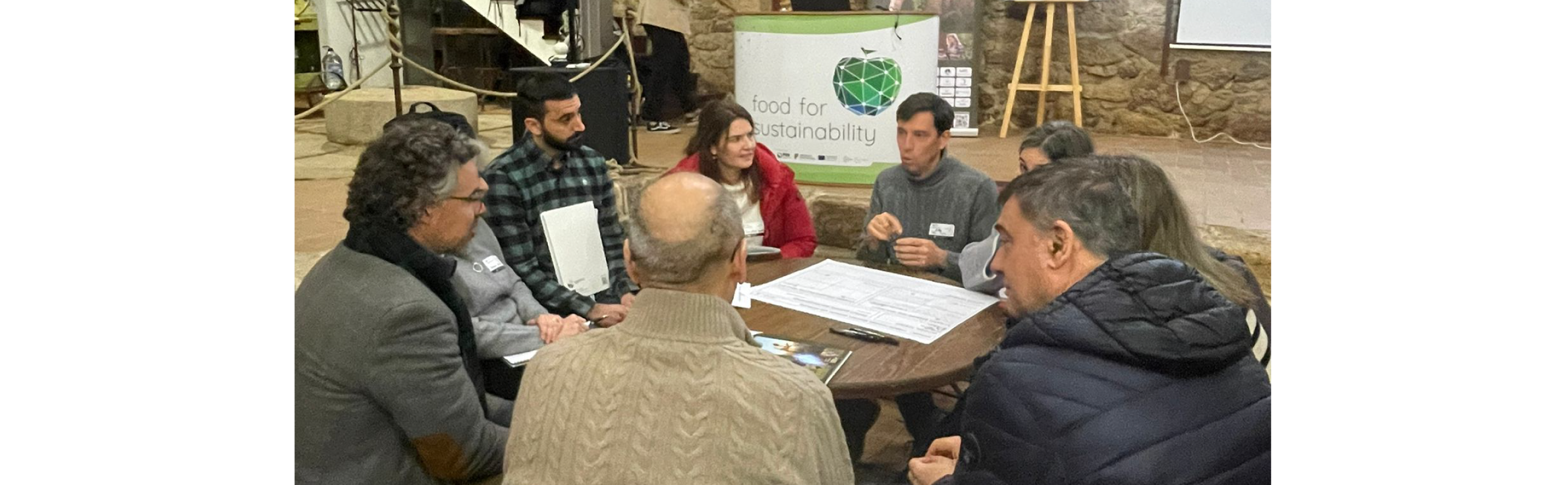
Listening Before Prescribing
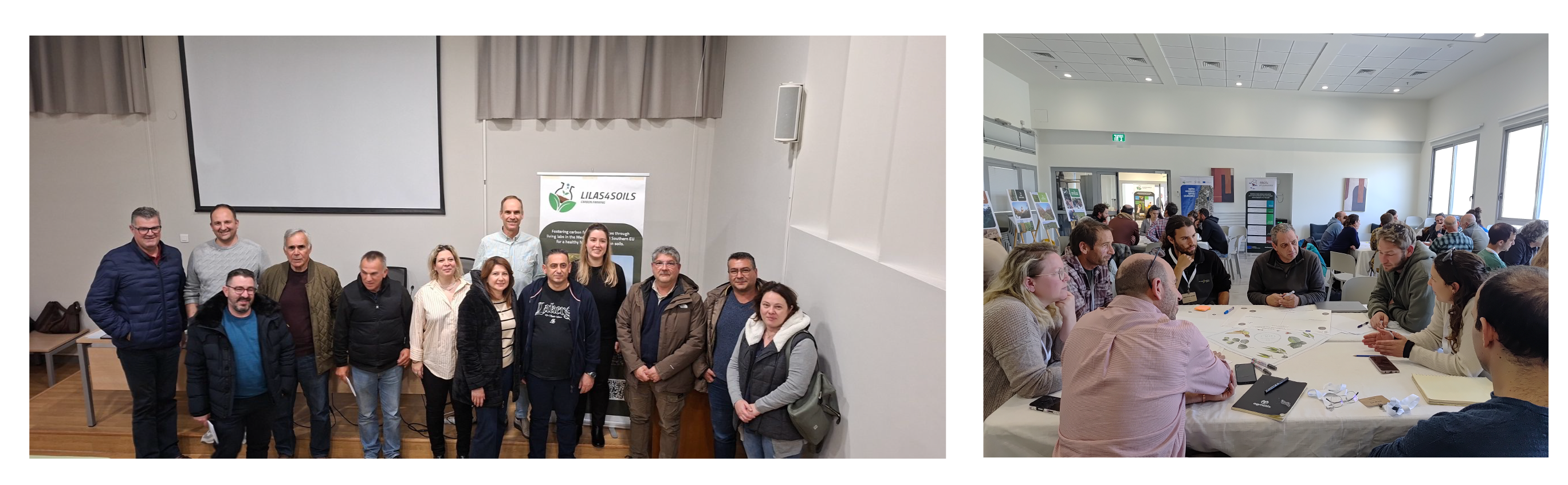
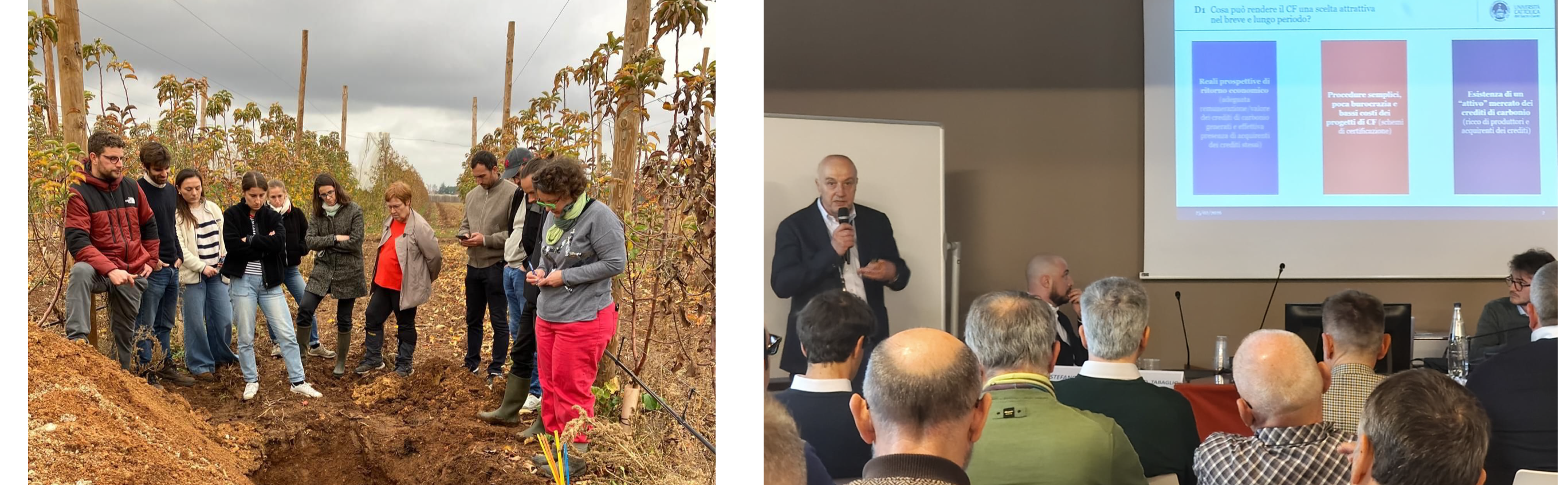
The co-creation cycle began with preparatory questionnaires that provided initial insights on the perspectives of each stakeholder type. Through this preliminary consultation, Living Labs gathered 256 responses: 162 from the farming sector (farmers and technical advisors), 38 from the agri-food industry and civil society, and 56 from research, schools, public authorities and foundations. The results then informed five co-creation workshops, held in Montpellier (SOFRALL in December 2025), Idanha-a-Nova (IBERSOILL in January 2026), and Thessaloniki (GRECFL²), Mevo’ot Hermon (RAGILL) and Piacenza (SHARE) in February 2026.
Building on the questionnaire results, stakeholders first identified and prioritised technical, economic, socio-cultural and policy-related barriers and opportunities for carbon farming adoption. They then worked together to address practical implementation challenges at farm and demo-site level, co-developing locally adapted solutions. These included improved cover crop and tillage management, better access to machinery and advisory services, farmer-to-farmer learning, and more practical monitoring approaches. This process helped move from general perceptions to concrete implementation needs, laying out the groundwork for the subsequent cross-fertilisation workshop.
In total, 228 stakeholders took part in the workshops. Farmers formed the largest group, with 84 participants (37%), alongside researchers, policy representatives, agri-food actors, technical advisors, and NGOs. This mix of complementary expertise gave the discussions of both operational depth, and a multi-actor view of what carbon farming needs to work.
More Barriers Than Opportunities, but Clear Entry Points
Using a common reporting framework, each Living Lab classified and scored what helps, and what hinders carbon farming across four dimensions – technical, economic, socio-cultural, and policy-related. Stakeholders identified in the workshops' co-creation sessions 206 barriers and 129 opportunities, roughly 1.6 barriers for every opportunity. Yet the same exercise that exposed the constraints also gave several opportunities of high importance, pointing to clear entry points for action.

The administrative, policy, and regulatory dimension produced the fewest items but received the highest average scores for both barriers and opportunities. In other words, stakeholders see policy clarity, simpler procedures, and institutional support as central to the future of carbon farming.
Taken one by one, there are four dimensions that show what holds farmers back, and what could help them move forward:
- Technical
Gaps in training and advice, inconsistent and costly MRV methods, and a shortage of machinery adapted to conservation practices.
Stakeholders also highlighted the risks of transition: possible yield losses, more complex weed, nutrient and residue management, and slow soil carbon accumulation under hot Mediterranean conditions. The opportunities lie in stronger advisory services, on-farm experimentation within the Living Labs, affordable digital tools for MRV (Monitoring, Reporting and Verification), and better field evidence.
- Economic and market
High upfront investment, delayed returns, low and unstable carbon prices and limited compensation for transition risks all weigh on farmers’ decisions.
The central issue is uncertainty. Markets also rarely reward the wider ecosystem services carbon farming provides, such as improved soil health, biodiversity and water regulation. Stakeholders saw opportunities in improvinged farm profitability through healthier soils and lower input needs, in payments for ecosystem services, and in adding value through certified sustainable products and existing quality schemes.
- Socio-cultural
Limited awareness, resistance to change and weak links between farmers, researchers, advisors and policymakers slow adoption.
Labour shortages and changing land ownership add further constraints. The answer, participants agreed, is trust built through experience: Living Labs, demonstration farms, peer-to-peer learning, and communication that speaks to farmers’ real concerns. Carbon farming could also help make agriculture more attractive to a new generation of farmers.
- Administrative, policy and regulatory
Unclear rules on certification, credit ownership and permanence discourage long-term commitment.
Burdensome reporting and limited recognition of early adopters add to the problem. As the EU Carbon Removals and Carbon Farming (CRCF) certification framework moves towards implementation, stakeholders called for harmonised European rules and methodologies, simpler procedures, and dedicated support within the Common Agricultural Policy that rewards both the adoption and the long-term maintenance of good practices.
Systemic solutions to remove barriers for carbon farming
Despite very different farming systems, from irrigated arable land and rice to dryland agroforestry and pastures, the five Living Labs reached a similar conclusion; the main barriers are systemic, and farm-level technical advice alone will not remove them. Progress depends on:
- stronger knowledge exchange and independent advisory services,
- credible and affordable MRV and certification,
- stable economic incentives and viable business models, and
- clear, coherent policy frameworks.
One message stood out across the Living Labs. Carbon payments alone are unlikely to drive large-scale adoption unless the economic framework becomes attractive, predictable, and accessible. The wider benefits of carbon farming, such as soil fertility, lower input needs, better water management and resilience to climate stress, need to be at the heart of the value proposition.
What Comes Next
The findings from LILAS4SOILS’s first co-creation cycle form a structured, participatory evidence base on carbon farming, and they are already shaping the project’s next steps. They guide the refinement of CFP implementation pathways at demo-site level and inform the next stakeholder engagement activities. For instance, they shaped the farmer cross-fertilization workshop organized by our project in June 2026 and the first policy workshop organized in July 2026. The LILAS4SOILS team is already working on the second co-creation cycle to be implemented between 2026 and 2027. Follow our channels and website for further news.
Follow the work of our Living Labs. Link...https://www.lilas4soils.eu/living-labs
For more information on the results of the first co-creation cycle read Deliverable D2.1 on our website. Link: https://www.lilas4soils.eu/resources
Edited by Paula Esteves, Comms and Dissemination Coordinator.


Funded by the European Union (Grant no. 101157414). Views and opinions expressed are however those of the author(s) only and do not necessarily reflect those of the European Union, European Research Executive Agency (REA). Neither the European Union nor any other granting authority can be held responsible for them.

