
No Fixed Recipes: What Farmers and Experts Learned Together at the LILAS4SOILS Cross-Fertilisation Workshop
Key findings and implementation insights on cover crops, fertilisation and reduced tillage
A cover crop that thrives on an irrigated plain in northern Italy may struggle on a dryland farm in central Portugal, where every millimetre of water is shared between the cover and the crop that follows. Carbon farming is full of practices that are sound in principle but demanding in practice, and most implementation challenges arise in the gap between the two.
Exchanging knowledge to close that gap was the purpose of the LILAS4SOILS Cross-Fertilisation Workshop, held online on 23rd June 2026. It brought together more than 123 farmers and technical experts from six countries, plus tecnical experts representing our five Living Labs (IBERSOILL, SOFRALL, SHARE, GRECFL² and RAGILL), to exchange experience on implementing carbon farming practices (CFPs) under contrasting Mediterranean conditions. The outcome was not a new set of prescriptions, but a different way of thinking about how good practice transfers from one farm to another.
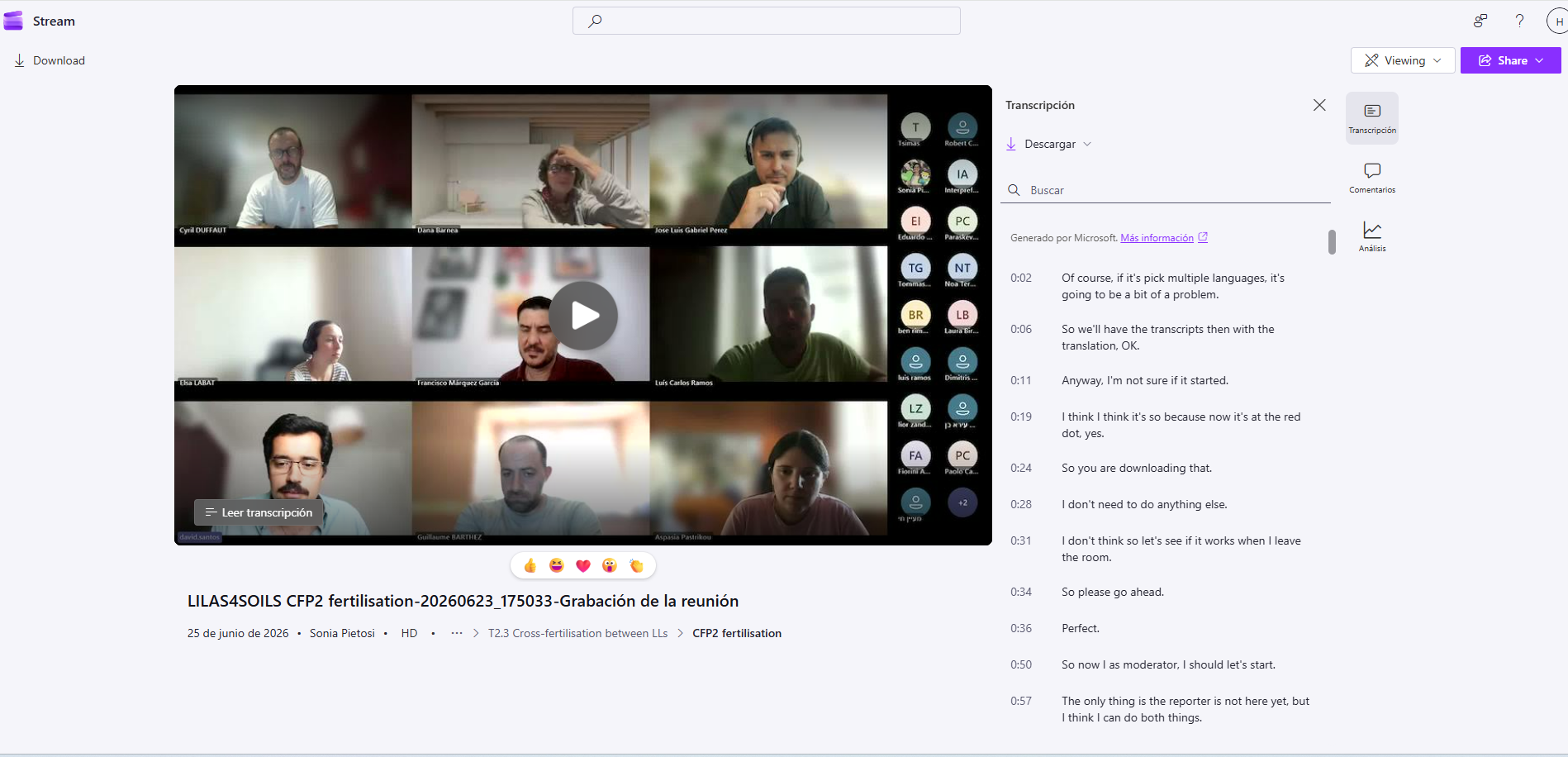
Farmers’ Questions at the Centre
Farmers’ field experience shaped the workshop agenda. The challenges faced by farmers had been identified previously in the Living Labs co-creation workshops, and the three practices common to all—were addressed in three parallel sessions:
- Cover Crops,
- Optimisation of Fertilisation,
- Reduced or No Tillage.
Each session brought together farmers from different countries who face similar challenges, so a grower in Portugal could compare notes directly with peers in Greece or Israel working through the same problem. Language was no barrier either: with support from online interpreters' tools and Living Lab facilitators, which encouraged farmers to question, compare and build on each other’s experience directly.
Invited experts opened each discussion with practical technical perspectives. Farmers then explained how the practices actually perform, and how this performance depends on the soil, farm and climate conditions. The real value came from the exchange between farmers and experts, which showed how different practices could boost one another, or compete, and how farm management evolves as farmers gain experience
Start from the Soil, Not from the Practice
All three sessions reached the same conclusion: successful implementation starts from understanding how the soil and the farming system function, not from choosing a practice, species, input or technology. That calls for an integrated diagnosis that reads physical, chemical, and biological soil conditions together with crop history, water availability, and the operational realities of the farm. Soil cover, roots, crop diversification, reduced soil disturbance,residues management and nutrient cycling all act on the same soil processes, so they cannot be managed in isolation.
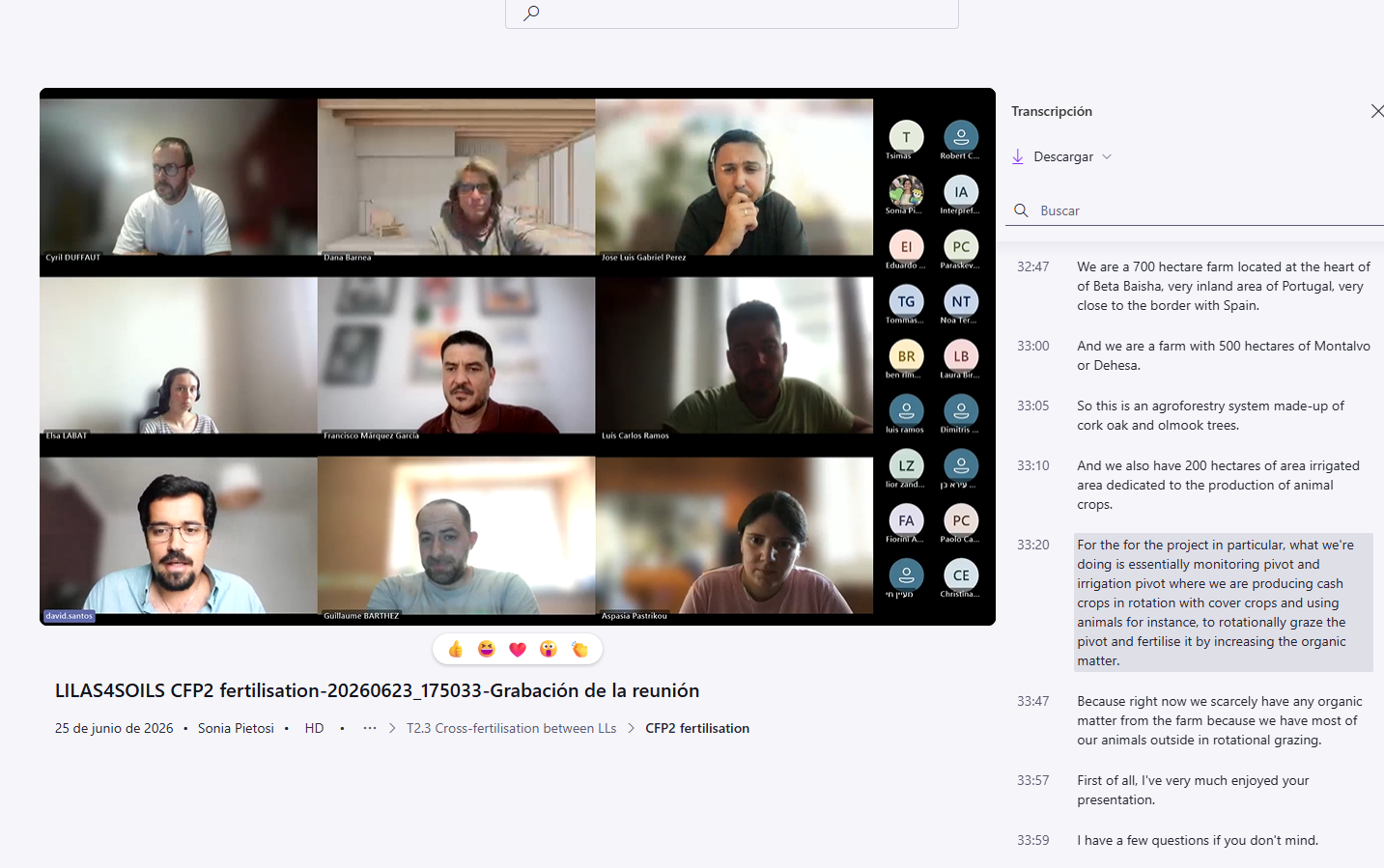
Same Principles, Different Solutions
As participants concluded, shared agronomic principles do not mean uniform management. Cover-crops, species, termination timing, residue management, drilling machinery, weed control and fertiliser placement all have to respond to local soils, climate and cropping systems.
Farmers also stressed how tightly field operations are linked. How a cover crop grows and is terminated determines water used and the residue left on the surface. That residue then affects direct drilling, fertiliser application, and weed management. The result of one operation often becomes the starting condition for the next. Under Mediterranean conditions this chain is especially fragile: scarce, and erratic rainfall can limit both the cover and the following cash crop, while wet spells can sharply narrow the window for safe machinery traffic on vulnerable soils.
A Transition, Not a Switch
Moving to carbon farming practices is progressive and adaptive. Soil structure, biological activity, nutrient cycling and weed communities keep changing after management changes, so early decisions carry long-lasting weight. Preventing weed seed production at the start of the transition can reduce weed pressure well into the future.
Measuring progress also needs a wider lens. Yield remains essential, but farmers highlighted the value of tracking soil structure, infiltration, moisture, trafficability, and resilience to extreme weather. These indicators matter because soil improvements build gradually, while investment costs and risks arrive immediately.
When Good Agronomy Is Not Enough
A technically sound option can still fail in the field if residues, equipment, soil moisture or traffic conditions prevent it from being carried out reliably. Beyond the field, whether a strategy lasts depends on machinery, labour, investment capacity, farm size, land tenure, markets and the time it takes for benefits to show. Specialised machinery is hard to justify on smaller farms, and this is where contractors and machinery-sharing arrangements can make the right strategy feasible.
A Shared Decision Logic
Taken together, the findings point to a recurring decision sequence:
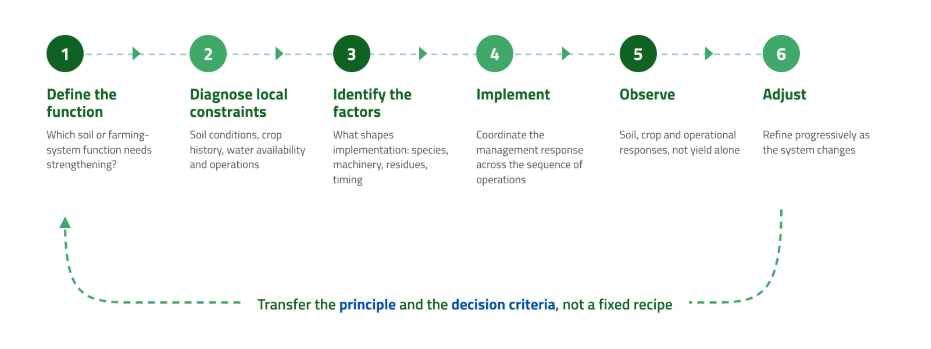
This changes what is shared between farms. What should be transferred is not a fixed recipe, but the agronomic principle, the decision criteria, and the evidence behind them. Rather than introducing new recommendations, the workshop validated this shared decision logic with farmers and highlighted the need to start from soil functioning, integrate practices around common soil functions, translate principles into locally workable strategies, plan the full sequence of operations, manage water, residues, weeds and nutrients together, adjust progressively through observation, and consider the conditions needed to sustain implementation over time.
From Workshop to Practical Guidance
These findings will now shape the upcoming LILAS4SOILS practice abstracts and Implementation Guidelines. They will be organised around the soil and farming-system functions to strengthen, such as protecting soil cover, minimising soil disturbance, managing residues and weeds, and improving nutrient-use efficiency, with clear pointers on what to monitor.
Above all, the innovative work put in place, which concluded with the workshop, confirmed the principle at the heart of the Living Lab approach: expert knowledge and farmer experience are complementary, not interchangeable. Experts bring the principles and the scientific framework; farmers bring the field evidence on what works, what conflicts and what it takes to keep going. Brought together across borders and languages, they produce guidance that respects the diversity of Mediterranean farming while allowing knowledge to travel from one farm, and one country, to another.
Article reviewed by: Benjamin Sanchez, Helena Gomez, WP2, Task 2.3 coordinators and Sonia Pietosi Project Coordinator.
Follow our Living Labs at link and stay tuned for the upcoming LILAS4SOILS news on our social media channels @Lilas4soils


Funded by the European Union (Grant no. 101157414). Views and opinions expressed are however those of the author(s) only and do not necessarily reflect those of the European Union, European Research Executive Agency (REA). Neither the European Union nor any other granting authority can be held responsible for them.

