
RAGILL’s journey so far: building a regenerative agriculture Living Lab in Israel
October 27, 2026
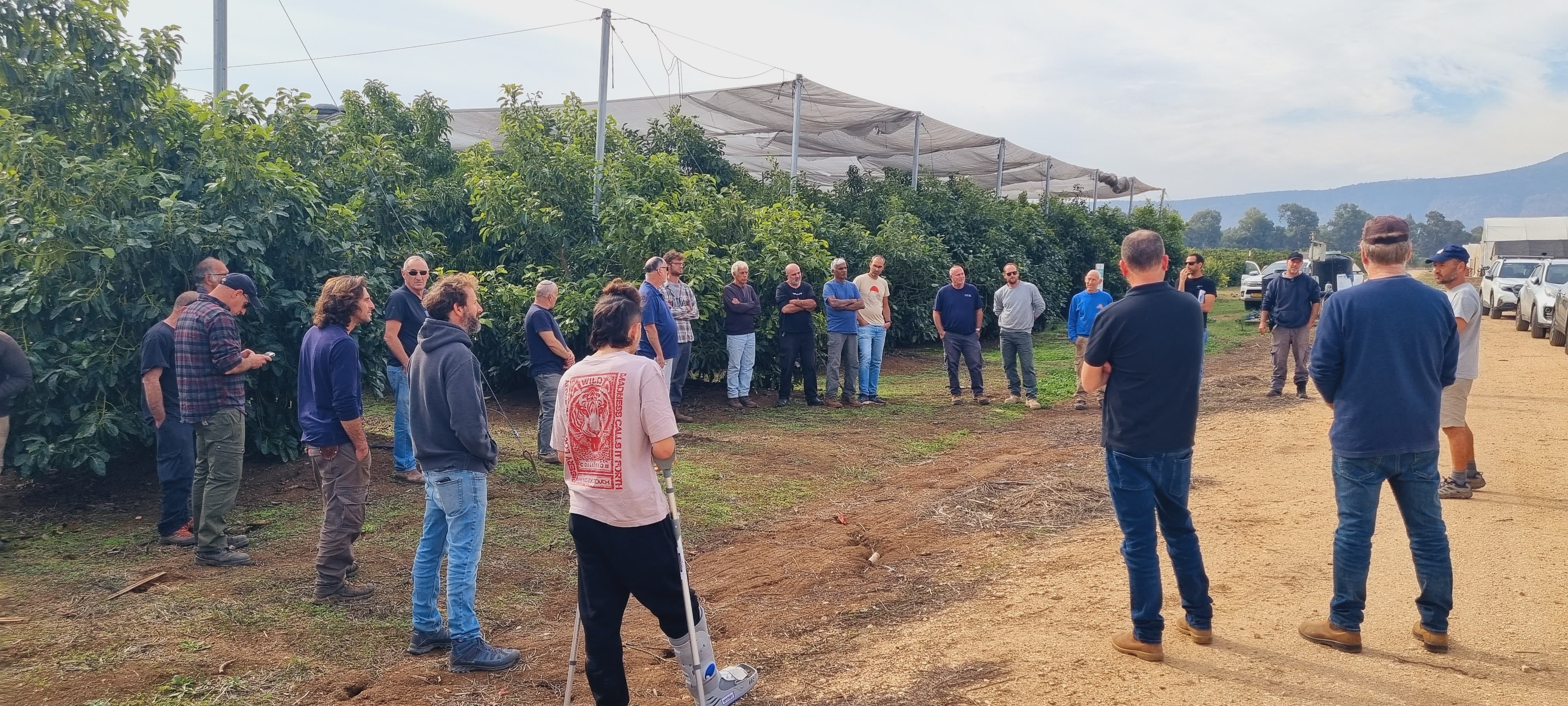
Every Living Lab has its own story. With “Our journey”, a new series, each of the five LILAS4SOILS Living Labs tells how it was built, what farmers and stakeholders have said, and what is happening in the field. We start in Israel, with RAGILL, the Regenerative Agriculture Israel Living Lab.
How it started
MIGAL Galilee Research Institute was invited to join the consortium preparing the LILAS4SOILS proposal after presenting its experience in European projects and regenerative agriculture at an EIT Food event. Once the project was approved, RAGILL was set up as a partnership between MIGAL, NIBBANA (Granot Group) and the Upper Galilee Regional Council Environmental Unit.
The first steps were to build partnerships, recruit farmers, select demonstration sites representing different farming systems, and understand farmers’ needs and challenges.
Who is part of it today
RAGILL now works with 24 demonstration sites across orchards, vineyards, field crops and dairy farms. Its stakeholder network includes 75 organisations from six sectors: 30 farmers and primary producers, alongside the agri-food industry, regional and national authorities, research institutions, environmental organisations, civil society and technology developers. A Steering Committee and a Professional Committee support the Living Lab’s work.
Many of the first farmers to join were already practising regenerative agriculture, some for many years, and several are considered pioneers in Israel. Ten more farms were selected through an open call published by the LILAS4SOILS consortium.
Listening to farmers and stakeholders
RAGILL was launched in April 2025 at the Agamon Hula Visitor Center, in the Hula Valley. More than 90 stakeholders from research, farming, industry, government and civil society worked together on a shared vision, a SWOT analysis and commitments for each sector. Three priorities emerged: clear economic benefits and practical support for farmers, reliable measurement and scientific evidence, and long-term collaboration across sectors.
“Conflict and tension signal the presence of value.” — Uri Ben Hertzel, workshop participant
In February 2026, a second workshop at the Ma’arag Center (Mevo’ot HaHermon Regional Council) brought together 85 participants: researchers (31%), farmers (30%), industry (16%), policymakers and public authorities (13%) and NGOs and civil society (10%). In mixed groups, they discussed the barriers to adopting regenerative practices and how to apply specific carbon farming practices under local conditions. Three messages stood out:
- Trust and practical knowledge: farmers need locally relevant information, demonstrations and peer-to-peer learning.
- Support during the transition: changing practices is gradual and brings economic and operational uncertainty, especially around yields.
- Data and measurement: reliable monitoring and clear protocols are essential to evaluate results and link environmental benefits to economic value.
“Farmers need the capacity to absorb the risk of potential yield losses during the transition. In the long term, we need to learn from experience and collect evidence from other farms.” — Dana Barnea, farmer, RAGILL Living Lab
From listening to action
The clearest result of the workshops was farmers’ need for continuous professional support. RAGILL responded with an agronomic support programme of eight advisors, who help farmers implement their Transition Plans, adapt practices to local conditions and document what they do in the field. For the team, this was the moment the Living Lab moved from planning to practice.
In the field
Practices are adapted to each farming system. The most common are cover cropping (18 farms), reduced soil disturbance in cropland (17 farms), nutrient planning and manure incorporation (16 farms each), followed by improved grazing management, crop rotation and hedgerows. LILAS4SOILS demonstration and control sites cover 106.4 hectares within participating farms that together manage around 8,365 hectares.
Monitoring includes soil sampling following the common LILAS4SOILS protocol, weed, mesofauna and eDNA surveys, and a preliminary life cycle assessment. First observations are in preparation.
One lesson for others
Asked what they would tell someone building a Living Lab elsewhere, the RAGILL team is clear: involve partners and stakeholders from the very beginning.
Bringing organisations together is not enough; everyone needs to feel a shared sense of ownership and commitment.
What comes next
RAGILL’s second co-creation cycle is planned for February 2027. In the coming months, we will also share video testimonies from RAGILL farmers and advisors about their experience of the transition.

Funded by the European Union (Grant no. 101157414). Views and opinions expressed are however those of the author(s) only and do not necessarily reflect those of the European Union, European Research Executive Agency (REA). Neither the European Union nor any other granting authority can be held responsible for them.

